



 View My Stats
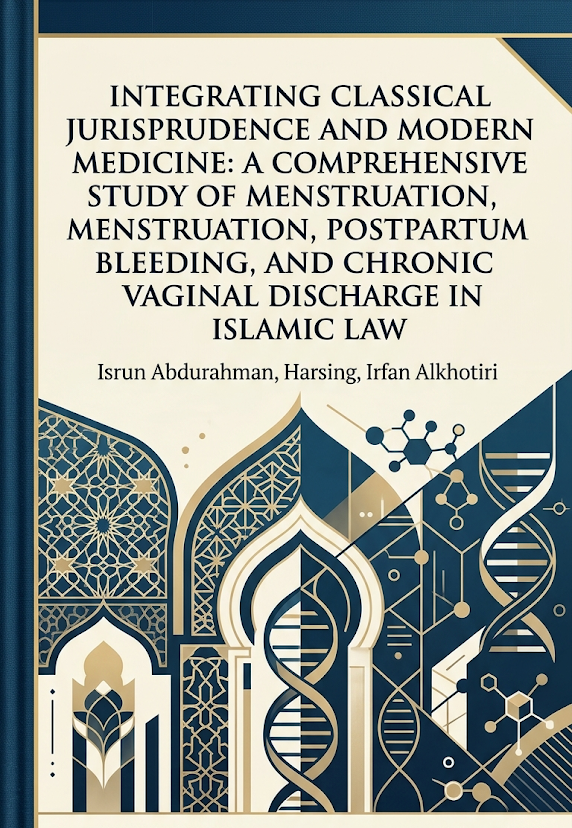
Integrating Classical Jurisprudence and Modern Medicine: A Comprehensive Study of Menstruation, Postpartum Bleeding, and Chronic Vaginal Discharge in Islamic Law
- Authors
-
-
Isrun Abdurahman
Sekolah Tinggi Agama Islam Minhajul HaqAuthor -
Harsing
Sekolah Tinggi Agama Islam Minhajul HaqAuthor -
Irfan Alkhotiri
Sekolah Tinggi Agama Islam Minhajul HaqAuthor
-
- Keywords:
- Women's Fiqh, Haid, Nifas, Istihadhah, Integrative Medicine, Islamic Jurisprudence
- Abstract
-
This article provides an in-depth analysis of the legal rulings (ahkam) surrounding women's natural blood—namely menstruation (haid), postpartum bleeding (nifas), and irregular bleeding (istihadhah)—by synthesizing classical Islamic jurisprudence (turath) with contemporary medical science. Within the Islamic tradition, the accurate identification of these blood types is not merely a biological concern but a fundamental requirement for the validity of ritual worship (ibadah), including prayer, fasting, and pilgrimage. Through a comparative study of the four major Sunni schools of thought (Hanafi, Maliki, Shafi'i, and Hanbali), this research highlights the diversity of ijtihad regarding the duration, characteristics, and legal implications of vaginal discharge. Furthermore, the study integrates modern physiological understandings of the uterine cycle and lochia to provide a more holistic framework for Muslim women in the contemporary era. Special attention is given to the use of menstrual delay medications for religious purposes and the psychological impact of ritual exclusion. The findings emphasize the necessity of a multidisciplinary approach that bridges the gap between religious literacy and reproductive health education to ensure spiritual well-being and legal certainty for Muslim women.
- References
-
Amani, R. U., Arif, S., & Nawawi, K. M. (2023). Pandangan Para Ulama Tentang Darah Haid dan Darah Istihadhah. As-Syar'i: Jurnal Bimbingan & Konseling Keluarga, 5(1), 144-155.
Alpiansyah, R., Abdurahman, I., Alkhotiri, I., Wangsadanureja, M., & Dzulfikri. (2026). Paylater Mindset: The Shift in Gen Z’s Thinking Towards Debt from a Sharia Perspective. Dirham : Journal of Islamic Economics, 1(1), 83-107. https://doi.org/10.66891/3a26sp98
Rafid, M., Ikhsan, M., & Muhammad. (2025). Tinjauan Hukum Islam terhadap Ibadah Wanita yang Nifas Melebihi 40 Hari Studi Komparatif Mazhab Syafii dan Mazhab Hambali. AL-FIKRAH: Jurnal Kajian Islam, 2(2), 642-664.
Ubaidillah, M., et al. (2025). Islamic Students' Understanding of Menstruation, Postpartum, and Istihadhoh. Indonesian Journal of Islamic Studies, 13(2).
Najib, M. A., Musyafa'ah, N., & Syafaq, H. (2024). Determination of Menstruation Duration from the Perspectives of the Four Major Sunni Schools. Al-Qanun: Jurnal Pemikiran dan Pembaharuan Hukum Islam, 27(2), 226-238.
Najib, M. A. (2024). Comparative Fiqh on Menstrual Duration: A Methodological Review. Qanun: Jurnal Ilmu Hukum.
Syahriar, A. (2023). A Comparative Study of the Fiqh Approach to the Hadith on Menstruation. Riwayah: Jurnal Studi Hadis, 9(2), 391.
Wimra, et al. (2023). Menstruation, Puerperium, and Istihadhah in the Qur'an and Hadith: A Gender Analysis. Marwah: Jurnal Perempuan, Agama dan Jender.
Osim, S. E., & Eteng, N. G. (2021). Women and Ritual Purity in Islam. Indonesian Journal of Social and Educational Studies, 2(1).
Putra, A. (2024). Woman and Fatwa: An Analytical Study of MUI's Fatwa on Women's Health and Beauty. AHKAM: Jurnal Ilmu Syariah, 24(1), 173.
Ar-Razi, F. (2025). Analisis Haid Dan Nifas Dalam Perspektif Tafsir Al-Kabir Mafatihul Ghaib. Al-Bayan: Jurnal Ilmu al-Qur'an dan Hadist, 8(2), 178-197.
USIM Research Team. (2024). The Implications of Istihadah Towards Women According to Al-Quran and Al-Sunnah. OAREP USIM.
Siti, R. (2008). Thaharah and Menstrual Blood Characteristics in the As-Syafie School. Al-Mufida: Jurnal Ilmu-Ilmu Keislaman.
Katz, M. H. (2002). Body of Text: The Emergence of the Sunni Law of Ritual Purity. SUNY Press.
Musawa Research Group. (2021). Menstrual Taboo and the Status of Women in Islam. MUSAWA: Jurnal Studi Gender dan Islam.
Hasim, et al. (2016). Menses from the Perspective of Science and Maqasid Syariah. ResearchGate.
Ilahiane, H. (2014). Mediating Purity: Ethical Anxiety and Ritual Hygiene. Human Organization, 73(4), 315-325.
Sarah & Nadia. (2021). Lochia and Uterine Involution: A Clinical and Fiqh Review. Journal of Family and Community Medicine.
Al-Jurjawi, A. A. (2020). The Philosophy of Hikmah Tasyri' in Thaharah. Petita: Jurnal Kajian Ilmu Hukum dan Syariah, 5(1), 85.
Pranoto, R., Abdurahman, I., Salim, A., Alkhotiri, I., & Alpiansyah, R. (2026). Empowering Student Dormitory Laundry Businesses in Pusakamulya Village: A Strategic Professionalization for Enhancing Community Economic Quality. Al Musa’adah : Journal of Community Service STAI Minhajul Haq, 1(1), 51-60. https://doi.org/10.66891/avk73z56
Saputra, & Habibi. (2025). Women's Fiqh Assistance on Menstruation to Increase Understanding in Rural Areas. NGEJHA: Jurnal Pengabdian Masyarakat.
Zuhaili, W. (1997). Islamic Fiqh and Its Proofs (Al-Fiqh al-Islami wa Adillatuhu). Dar al-Fikr.
Herawati, et al. (2024). Analysis of Islamic and Health Perspectives Regarding the Use of Menstrual Delay Pills. ResearchGate.
Azwinda, D. (2022). Penggunaan Obat Penunda Haid Untuk Berpuasa Ramadhan (Perspektif Ulama NU dan Ulama Salafi). Al-Mazaahib: Jurnal Perbandingan Hukum, 8(2), 165-178.
Dahri, N. (2020). Istihadhah and Its Problems in Modern Life. Martabat: Jurnal Perempuan dan Anak, 4(1).
- Cover Image
-
- Downloads
- Published
- 2026-06-30
- Section
- Articles
- License
-

This work is licensed under a Creative Commons Attribution-ShareAlike 4.0 International License.
You are free to:
- Share — copy and redistribute the material in any medium or format for any purpose, even commercially.
- Adapt — remix, transform, and build upon the material for any purpose, even commercially.
- The licensor cannot revoke these freedoms as long as you follow the license terms.
Under the following terms:
- Attribution — You must give appropriate credit , provide a link to the license, and indicate if changes were made . You may do so in any reasonable manner, but not in any way that suggests the licensor endorses you or your use.
- ShareAlike — If you remix, transform, or build upon the material, you must distribute your contributions under the same license as the original.
- No additional restrictions — You may not apply legal terms or technological measures that legally restrict others from doing anything the license permits.
Notices:
You do not have to comply with the license for elements of the material in the public domain or where your use is permitted by an applicable exception or limitation .
No warranties are given. The license may not give you all of the permissions necessary for your intended use. For example, other rights such as publicity, privacy, or moral rights may limit how you use the material.
How to Cite
Similar Articles
- Rizaldy Alpiansyah, Rohman Pranoto, Agus Salim, Miftah Wangsadanureja, Tatang Hidayat, A REVIEW OF FIQH MUAMALAH ON CONSUMER PROTECTION IN THE E-COMMERCE ERA: AN ANALYSIS OF PERSONAL DATA, REFUND POLICIES, AND STANDARD CLAUSES , Mutamayyiz: Journal of Islamic Studies: Vol. 1 No. 1 (2026): Mutamayyiz: Journal of Islamic Studies
- Harsing Harsing, Irfan Alkhotiri, Agus Salim, The Prophetic Mud Standard: A Comprehensive Jurisprudential, Socio-Technical, and Ecological Critique of Water Extravagance in Ritual Purification , Mutamayyiz: Journal of Islamic Studies: Vol. 1 No. 1 (2026): Mutamayyiz: Journal of Islamic Studies
- Rizaldy Alpiansyah, Isrun Abdurahman, Irfan Alkhotiri, Miftah Wangsadanureja, Dzulfikri, DECONSTRUCTING THE HISTORICAL NARRATIVE: A CRITICAL REVIEW OF THE ABSENCE OF A CONSTRUCTIVE ROLE OF THE SHIA FACTION IN THE PAST, PRESENT, AND FUTURE OF ISLAMIC CIVILIZATION , Mutamayyiz: Journal of Islamic Studies: Vol. 1 No. 1 (2026): Mutamayyiz: Journal of Islamic Studies
- Isrun Abdurahman, Rohman Pranoto, Agus Salim, Rizaldy Alpiansyah, Irfan Alkhotiri, INTERNALISASI NILAI KARAKTER ANAK MELALUI PENGULANGAN SURAT AL-FATIHAH: SEBUAH SINTESIS KOMPREHENSIF BERDASARKAN NEUROSAINS, PSIKOLOGI PENDIDIKAN, DAN TEOLOGI ISLAM , Mutamayyiz: Journal of Islamic Studies: Vol. 1 No. 1 (2026): Mutamayyiz: Journal of Islamic Studies
You may also start an advanced similarity search for this article.
Most read articles by the same author(s)
- Rizaldy Alpiansyah, Isrun Abdurahman, Irfan Alkhotiri, Miftah Wangsadanureja, Dzulfikri, DECONSTRUCTING THE HISTORICAL NARRATIVE: A CRITICAL REVIEW OF THE ABSENCE OF A CONSTRUCTIVE ROLE OF THE SHIA FACTION IN THE PAST, PRESENT, AND FUTURE OF ISLAMIC CIVILIZATION , Mutamayyiz: Journal of Islamic Studies: Vol. 1 No. 1 (2026): Mutamayyiz: Journal of Islamic Studies
- Harsing Harsing, Irfan Alkhotiri, Agus Salim, The Prophetic Mud Standard: A Comprehensive Jurisprudential, Socio-Technical, and Ecological Critique of Water Extravagance in Ritual Purification , Mutamayyiz: Journal of Islamic Studies: Vol. 1 No. 1 (2026): Mutamayyiz: Journal of Islamic Studies
- Isrun Abdurahman, Rohman Pranoto, Agus Salim, Rizaldy Alpiansyah, Irfan Alkhotiri, INTERNALISASI NILAI KARAKTER ANAK MELALUI PENGULANGAN SURAT AL-FATIHAH: SEBUAH SINTESIS KOMPREHENSIF BERDASARKAN NEUROSAINS, PSIKOLOGI PENDIDIKAN, DAN TEOLOGI ISLAM , Mutamayyiz: Journal of Islamic Studies: Vol. 1 No. 1 (2026): Mutamayyiz: Journal of Islamic Studies